Restaurant & Kitchen Epoxy in Naperville, IL
We put epoxy floors down in restaurant kitchens, prep rooms and other food businesses across Naperville, Illinois.
- Quotes in writing
- 21 areas covered
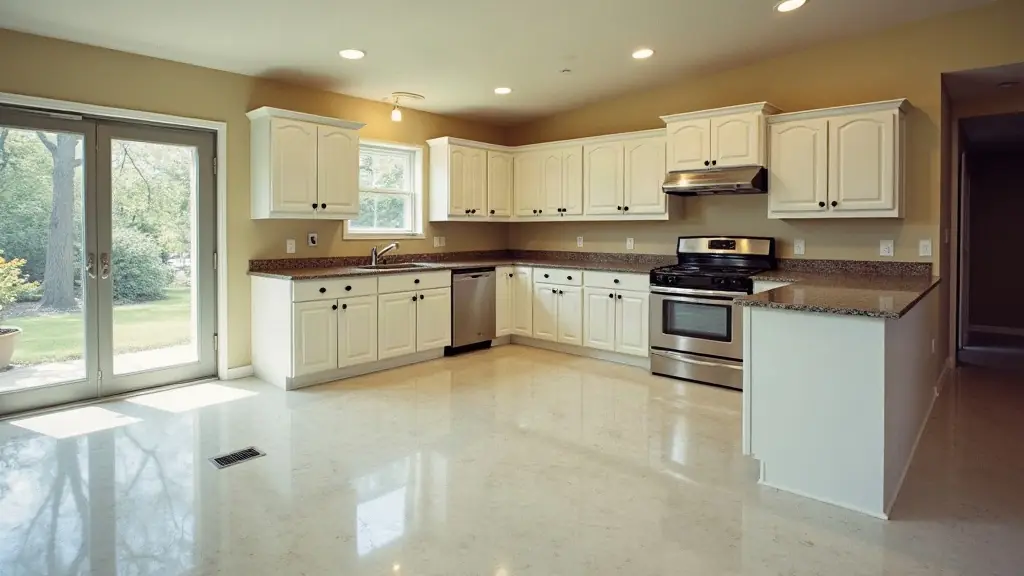
Naperville Epoxy Flooring coats kitchen and food business floors across Naperville. We walk the kitchen with you, look at the concrete, and send you a written quote before any work starts.
What a kitchen epoxy floor is
NIOSH, which is part of the CDC, says epoxies and resins are chemicals that can combine to form a hard, strong surface when they cure, or dry. It says they are often used in two-part glues or surface coatings. In a kitchen, we lay the coat as one smooth sheet with no grout lines, so there are no gaps for water and food to sink into.
What the food code asks of a kitchen floor
The Illinois Department of Public Health says Illinois has adopted the 2022 Food Code from the U.S. Food and Drug Administration, or FDA, so the same rules apply throughout the state.
Washington State's food code labels one of its sections as the FDA Food Code rule for floors. That section says floors where food work is done must be smooth, durable and easy to clean. It also says floors in areas that get wet, such as food prep areas, walk-in refrigerators, places where dishes are washed, and toilet rooms, must not soak up water.
We coat floors in all of those rooms. We can do a walk-in cooler too, if it can be shut off and emptied while the coat goes down and cures.
Where the floor meets the wall
Another section of Washington's code, labeled as an FDA Food Code rule, says the line where the floor meets the wall must be curved, which the code calls coved. Where floors are not cleaned by flushing them with water, they say any gap there must be no bigger than one thirty-second of an inch. Where floors are flushed with water, they say the floor needs drains, has to slope toward them, and the curve at the wall has to be sealed.
We can run the coat up the wall in a smooth curve, so there is no sharp corner where dirt and water collect. We also coat right up to the edge of each floor drain.
Grip on wet and greasy floors
OSHA's guide to restaurant safety for young workers says slips, trips and falls can happen in the cooking area from cluttered, slippery floors with oil, water or food on them. It says some mats may not work in areas that tend to be greasy, and that no-skid waxes and floor surfaces coated with grit may help there.
So on the cook line, at the dish station and anywhere else you tell us gets wet or greasy, we mix a fine grit into the top coat.
Working around your service
We plan the job around your hours. We can coat one area at a time, so part of the kitchen keeps working while we do the rest, or we can do the whole floor while you're closed. We tell you in writing when each area can be walked on again and when equipment can go back.
Grinding dust and fumes
OSHA says concrete contains crystalline silica. It says grinding concrete creates very small particles of it, at least 100 times smaller than ordinary sand you might find on beaches and playgrounds. We keep the grinding dust down and away from your food, and we ask you to put food, dishes and anything else that can be moved somewhere covered or out of the room first.
NIOSH says to increase ventilation as much as possible when using epoxies and resins. It also says that whether you can smell a chemical or not doesn't tell you if you are safe. We bring in as much fresh air as the space allows while we work and while the coat cures.
What to get in writing
Ask for these in writing, whoever you hire:
- The name of each product, and how many coats.
- Whether grit goes in the top coat, and in which areas.
- Whether the coat runs up the wall in a curve, and how high.
- How the work goes around floor drains.
- Which areas get done on which days.
- When staff can walk on each area, and when equipment can go back on it.
Questions about restaurant and kitchen epoxy in Naperville
Who checks my kitchen floor once it's done?
The Illinois Department of Public Health says restaurants and other food businesses in Illinois are regulated by the local health department that serves the area where they are. It says anyone starting a food business should contact the local health department where they plan to operate, so ask them what they will want to see before we start.
Why does a kitchen floor need to stay dry?
OSHA's restaurant guide says that, as well as being a slip hazard, surfaces that are wet all the time help mold, fungi and bacteria grow, and these can cause infections. Before we quote, we look for low spots in your floor where water sits, and we talk with you about how to deal with them.
Can a loose drain cover cause problems?
OSHA's guide says that in food prep areas, drain covers that have come off can be a hazard people trip or fall into. Before we coat, we check every drain cover with you, and we tell you if one needs fixing or replacing.
Is the floor safe for food work once it has cured?
NIOSH says cured epoxies are usually safer to handle than their uncured parts, and that as epoxies cure they generally turn into much less toxic materials. We tell you when each area is ready for your staff and your food.
Do you give us the safety data sheets?
Yes, we can give you the safety data sheet for each product we use. OSHA says all employers with hazardous chemicals in the workplace must have labels and safety data sheets for the workers exposed to them, and train them to handle those chemicals.
Can we take leftover coating to the Naperville drop-off?
The Illinois EPA says one of its long-term household hazardous waste drop-off sites is in Naperville. It says its collections take items such as paints and thinners, but business wastes are not accepted. So we take our leftover epoxy and empty cans away with us when we go.
Will you rinse tools in our sinks or floor drains?
No, we don't. The City of Naperville says not to flush or pour paint, harsh chemicals and similar products down the drain, because its wastewater plant has a hard time treating them and they can end up in local waterways. We clean up away from your sinks and drains.
How much does a restaurant epoxy floor cost?
We price your floor once we've walked the kitchen, and you get that quote in writing. For a floor with cracks or an old coating that has failed, see our epoxy floor repair page, and for other business floors, our commercial epoxy flooring page.
Get a quote for restaurant and kitchen epoxy
Call us, or send the quote form with your ZIP code and a note about your kitchen floor. We'll walk the space, go through the options with you, and give you a written quote. To see the other floors we coat, go to the Naperville Epoxy Flooring home page.
Ready to talk about your epoxy flooring job?
Send the quote form with your ZIP code and what you need. We will get back to you with a written quote.