Epoxy Floor Repair in Naperville, IL
We fix chipped, peeling and worn epoxy floors in garages, basements and businesses across Naperville, Illinois.
- Quotes in writing
- 21 areas covered
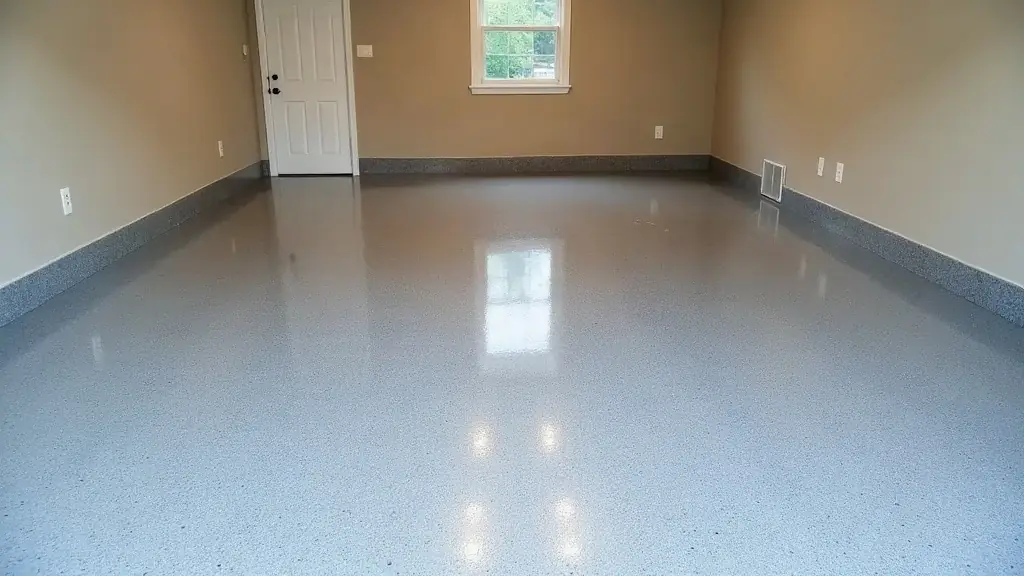
Naperville Epoxy Flooring repairs epoxy floors in garages, basements and businesses across Naperville. We look at the damaged coat with you, tell you whether it can be patched or needs a new coat, and send you a written quote before any work starts.
What we fix
We fix spots where an epoxy coat has chipped, peeled, lifted or worn thin, and spots where hot tires have pulled the coat up off a garage floor. If a crack has come up through the coat from the concrete below, our concrete crack repair page covers that part of the work.
Patch or recoat
Before we patch anything, we work out why the coat came loose, so the same spot doesn't fail again. Sometimes it is one small area, and we can patch it. Sometimes the coat is loose across much of the floor, and we tell you a full new coat makes more sense, such as our garage floor epoxy or a flake epoxy floor.
We'll tell you before we start if a patch is unlikely to match the color of your old coat.
How we patch a damaged coat
First we cut back the loose coat around the damage until we reach coat that is still stuck down hard. Then we grind the bare spot and the edge around it, so the new epoxy has a rough surface to grip.
Keeping the grinding dust down
OSHA says concrete contains crystalline silica. It says grinding concrete creates very small particles of it, at least 100 times smaller than ordinary sand you might find on beaches and playgrounds. OSHA says workers who breathe those particles in are at higher risk of serious diseases, including lung cancer and silicosis, an incurable lung disease. We ask you to keep kids and pets away while we grind.
OSHA's silica rule for building work says a hand grinder used indoors needs a shroud and a dust collection system. The shroud on the hand grinders we use is a cover around the spinning wheel, and the vacuum hose connects to it. OSHA's silica rule also says employers must not allow dry sweeping or dry brushing where it could add to workers breathing in silica, unless wet sweeping, HEPA vacuuming or other safer ways can't be done. So we vacuum the dust up instead of sweeping it.
Filling the spot
Once the dust is gone, we mix the epoxy and fill the spot. NIOSH, which is part of the CDC, says epoxies and resins are chemicals that can combine to form a hard, strong surface when they cure, or dry. We finish with a clear top coat over the patch and the edge around it.
Fumes while it cures
NIOSH says that before they cure, some epoxy parts can be harmful, and that as epoxies cure they generally turn into much less toxic materials. It also says harmful levels of chemicals cannot always be smelled. So we don't go by smell. We follow the label on each product we use.
The EPA says that if a label says to use a product in a well-ventilated area, use it outdoors or where there is an exhaust fan, or else open windows to let in as much outdoor air as you can. We keep the door from the garage into the house shut while the patch cures.
Repairs on business floors
OSHA says falls on the same level, on a working surface, are among the leading causes of serious work-related injuries and deaths. Its rule for floors at work says a hazard on a floor has to be fixed before an employee uses that floor again, and if it can't be fixed right away, it has to be guarded so no one uses it. We can tape off the damaged area and fix it while the rest of your floor stays open.
OSHA's safety color rule says yellow is the basic color for caution and for marking hazards such as bumping into things, tripping, falling and getting caught in between things. If the repair runs through a painted yellow line on your floor, we paint the line back in.
What to get in writing
Ask for these in writing, whoever you hire:
- Which spots will be repaired, and how big each one is.
- Whether the repair is a patch or a full new coat.
- The name of each product, and how many coats.
- Whether the patch will match the color of the old floor.
- How the dust will be kept down and cleaned up.
- When you can walk on the floor, and when you can drive on it.
Questions about epoxy floor repair in Naperville
Why did my epoxy floor peel?
We can't say for sure until we've seen it, so we look at the floor and the loose coat before we tell you what went wrong.
Can you fix a floor someone else put in?
Yes, we can repair an epoxy floor that another company put down. We ask what product they used, if you know, so the patch bonds to it.
Can you repair just one small spot?
Yes, we can patch just one spot, and if the rest of your coat is still stuck down hard, we leave it alone.
What happens to the old epoxy and dust you clean up?
We bag it and take it with us. The City of Naperville says not to flush or pour paint, harsh chemicals and similar products down the drain, because its wastewater plant has a hard time treating them and they can end up in local waterways. So we never rinse our tools in a sink or floor drain.
What should I do with leftover epoxy in my garage?
The Illinois EPA says one of its long-term household hazardous waste drop-off sites is in Naperville. It says its collections take items such as paints and thinners, but business wastes are not accepted.
How much does epoxy floor repair cost?
We price your repair once we've seen the floor, and you get that quote in writing.
Get a quote for epoxy floor repair
Call us, or send the quote form with your ZIP code and a note about your floor. We'll look at the damage, go through the options with you, and give you a written quote. To see the other floors we coat, go to the Naperville Epoxy Flooring home page.
Ready to talk about your epoxy flooring job?
Send the quote form with your ZIP code and what you need. We will get back to you with a written quote.